Risk Management · 2025
In this section3 topics
Risk Management Policy & Plan
Policy & Plan Description
Risk Management
Risk Management Policy and Oversight
Praram 9 Hospital Public Company Limited places importance on risk management at all levels. The hospital's risk management policy is divided into:
1) Clinical Risk Policy, where the hospital prioritizes patient safety and offers international-quality medical services, measured by continuous JCI (Joint Commission International) accreditation in every cycle.
2) Enterprise Risk Management (ERM) Policy, which the hospital implements according to the Best Practice procedures of the international standard COSO ERM 2017.
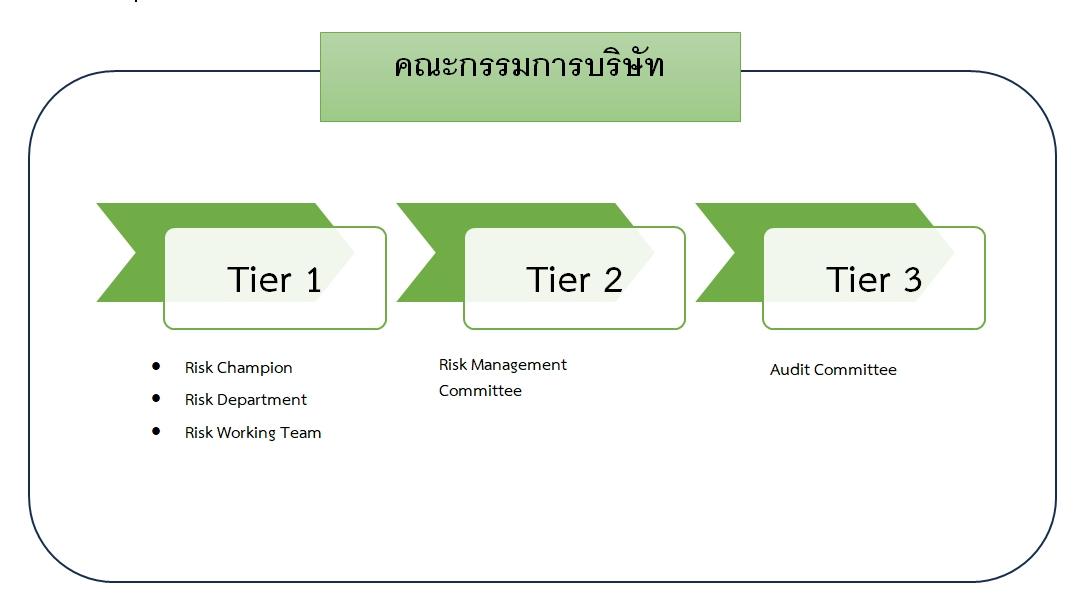
The hospital employs the Three Lines of Defense principle for risk management oversight, aiming for everyone in the organization to be involved in risk management to foster a risk-aware organizational culture. The oversight structure is divided into:
First Line of Defense (Tier 1)
is the first line of risk management, comprising the Risk Champion / Risk Department / Risk Working Team, whose primary duties are to identify, assess, manage, and monitor actual risks in their own work processes, report risks or unusual incidents to management, and proactively work to prevent recurring risk events. Praram 9 Hospital has appointed Risk Champions to work with the Risk Department and Risk Working Team.
Second Line of Defense (Tier 2)
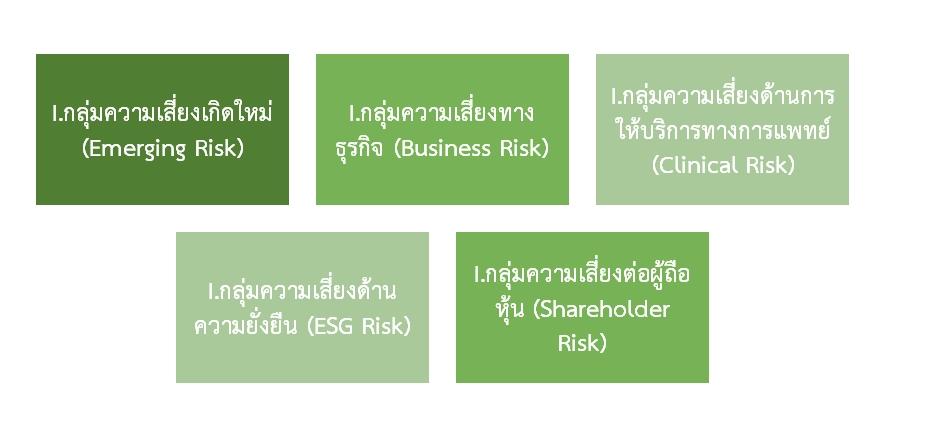
The Enterprise Risk Management Committee acts as the Second Line of Defense (Tier 2), controlling, supervising, and approving risk analysis and risk management approaches for all 5 risk groups to adequately achieve the hospital's vision and mission, while also supporting and promoting the development of a risk culture throughout the organization through systematic education.
Third Line of Defense (Tier 3)
Third Line of Defense (Tier 3) is responsible for acknowledging and providing opinions on all 5 enterprise-wide risk groups, as well as recommending improvements to align the risk management system with the Three Lines of Defense principles linked to internal control and internal audit.
Roles and Responsibilities of Senior Management
supporting the operational mechanisms of the Risk Management Committee and acting as Risk Owners, who are responsible for collaboratively analyzing risks, planning and designing risk response approaches, and systematically defining Key Risk Indicators (KRIs).
Roles and Responsibilities of the Risk Management Department
The hospital has established a Risk Management Department with the primary responsibility of ensuring the implementation of the international COSO ERM (Committee of Sponsoring Organizations of the Treadway Commission, Enterprise Risk Management) framework throughout the organization, as well as acting as a facilitator for risk owners to achieve risk objectives. It also serves as the main unit for organizing activities to promote a risk culture and establish a Risk Champion system.
International standards for Enterprise Risk Management (ERM)
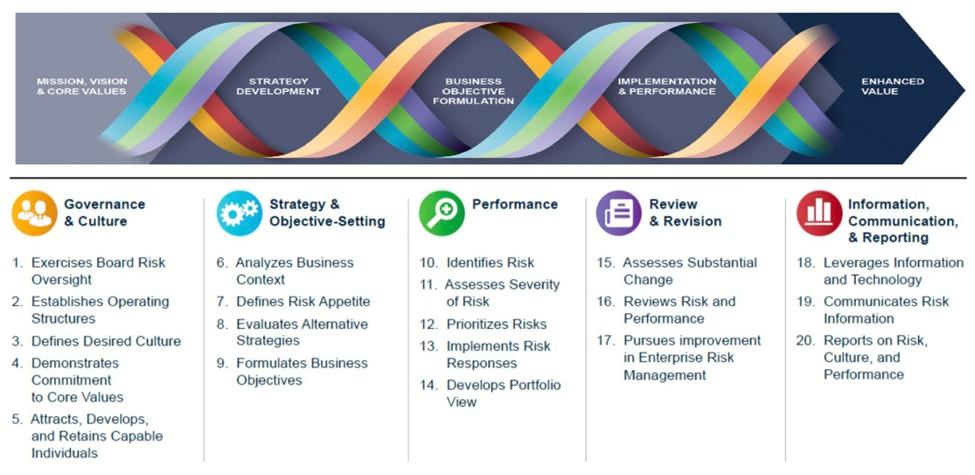
Praram 9 Hospital Public Company Limited places importance on Enterprise Risk Management (ERM). The hospital's risk management process follows the international standard COSO ERM 2017, comprising 5 main components and 20 sub-principles, as shown in the image below.
-
Governance and Culture This includes having a Board of Directors, Audit Committee, and Risk Management Committee with clear responsibilities, as well as senior management and all levels of hospital staff emphasizing and implementing risk management procedures. The hospital also has a risk management policy, manuals, and reports, as well as fostering risk management awareness throughout the company. There are 5 principles: Exercises Board Risk Oversight (2), Establishes Operating Structures (3), Defines Desired Culture (4), Demonstrates Commitment to Core Values, and Attracts, Develops, and Retains Capable Individuals.
-
Strategy and Objective Setting The hospital implements risk management linked to the company's main strategies and objectives. This step consists of 4 principles: Analyzes Business Context (7), Defines Risk Appetite (8), Evaluates Alternative Strategies, and
Formulates Business Objectives. -
Performance (There are 5 principles: Identifies Risk (11), Assesses Severity of Risk (12), Prioritizes Risks (13), Implements Risk Responses, and
Develops Portfolio View. The risk management system must be complete according to the risk management process. In 2024, the hospital's ERM Portfolio is divided into 5 risk groups.
Integration of ESG Risks into ERM
The hospital has elevated ESG risks to enterprise-level risks monitored by the Board of Directors, covering the following key dimensions:
-
Environmental & Climate Change Risk: The hospital aims to become a Net-Zero Hospital by utilizing the framework of TCFD (Task Force on Climate-related Financial Disclosures) Scope 1, 2, and 3 according to international standards, to achieve Carbon Neutrality. Furthermore, it is in the process of preparing for data disclosure under the IFRS S1-S2 and GRI frameworks.
-
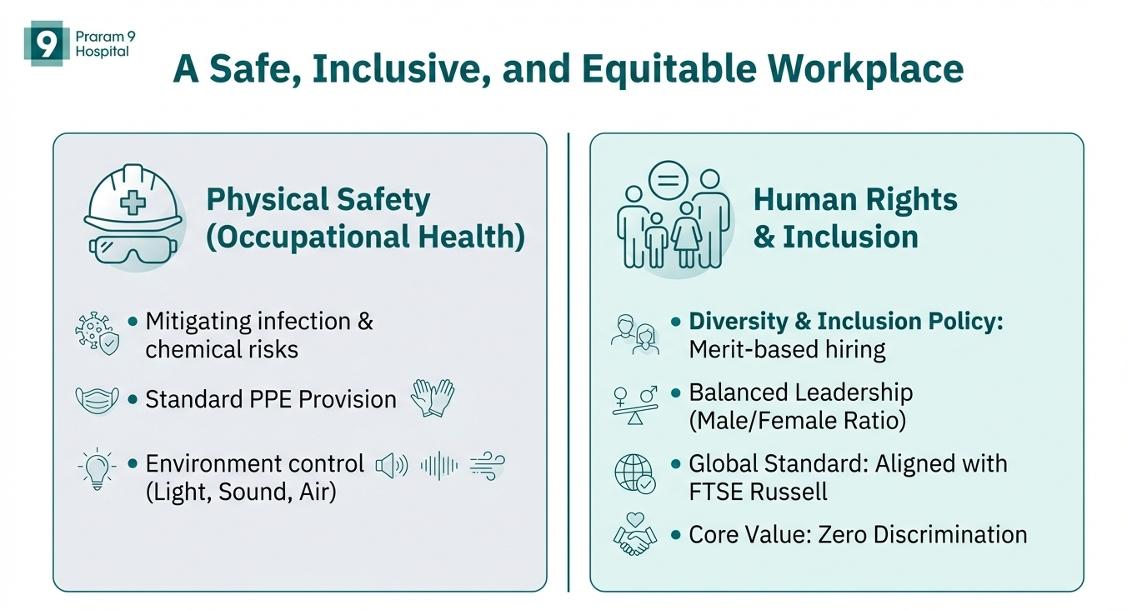
Social, Human Rights & Safety Risk: The hospital has a Diversity and Inclusion Policy, considering the balance of male and female representation in management and on the company's board. Operations comply with labor standards and the assessment framework of FTSE Russell strictly, while managing patient safety according to standards. JCI continuously certified in every cycle.
-
Governance Risk: conducting business transparently under the GRC (Governance, Risk and Compliance) framework and combating corruption.
Emerging Risks and Cyber Resiliency
-
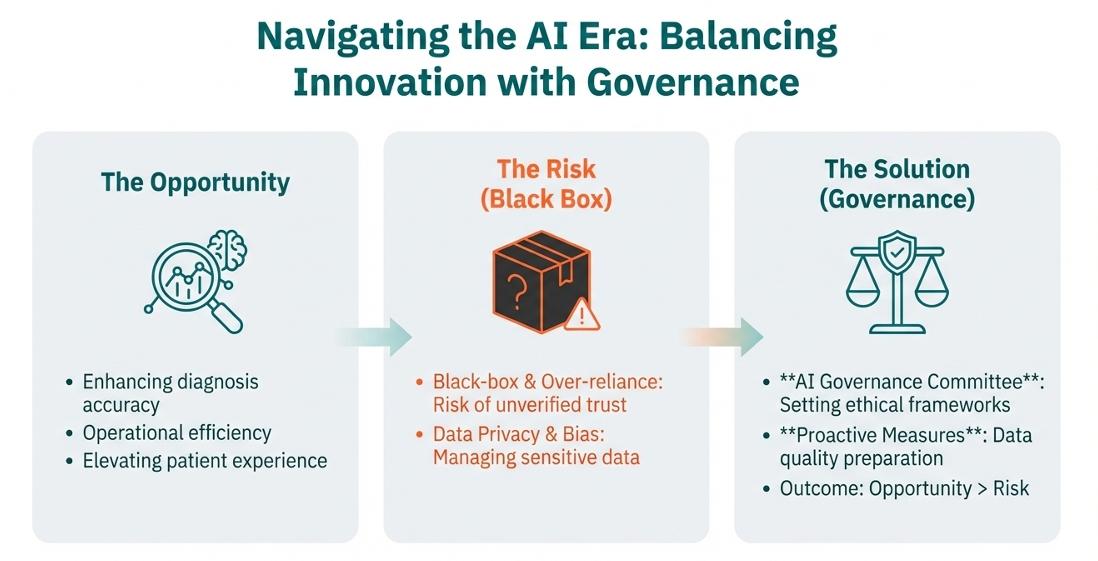
Risks from AI Use in Medicine: The hospital is a leader in assessing emerging risks from AI use (Black-box & Over-reliance) by establishing an AI Governance Committee to define governance, ethical, and data security frameworks before implementing AI to enhance treatment.
-
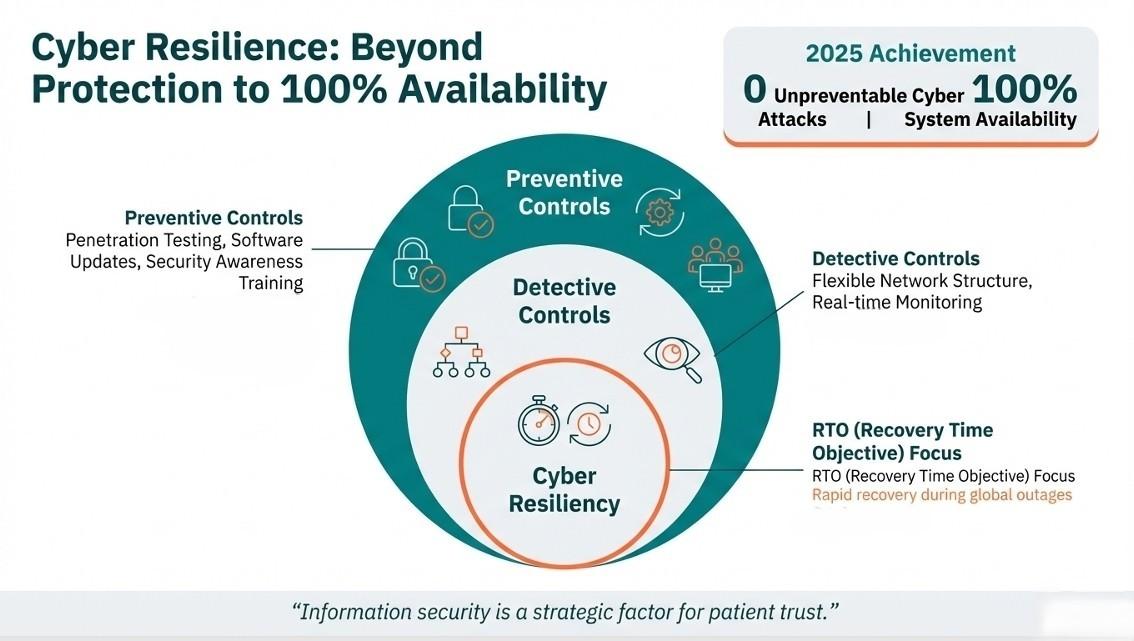
Cybersecurity Risk: elevating from prevention to cyber resiliency to ensure business continuity (BCM) and system recovery within defined recovery time objectives (RTO) even in the event of global technological disruptions.
4. Review and Revision The hospital regularly reviews all 5 risk groups, with risk owners coordinating with the risk management department. This step comprises 3 principles: Assesses Substantial Change (16), Reviews Risk and Performance, and Pursues Improvement in Enterprise Risk Management.
5. Information, Communication, and Reporting The Company
Risk data is collected, communicated to all levels of employees, as well as the reporting process.
There are 3 principles: Leverages Information and Technology (19), Communicates Risk Information, and Reports on Risk, Culture, and Performance.
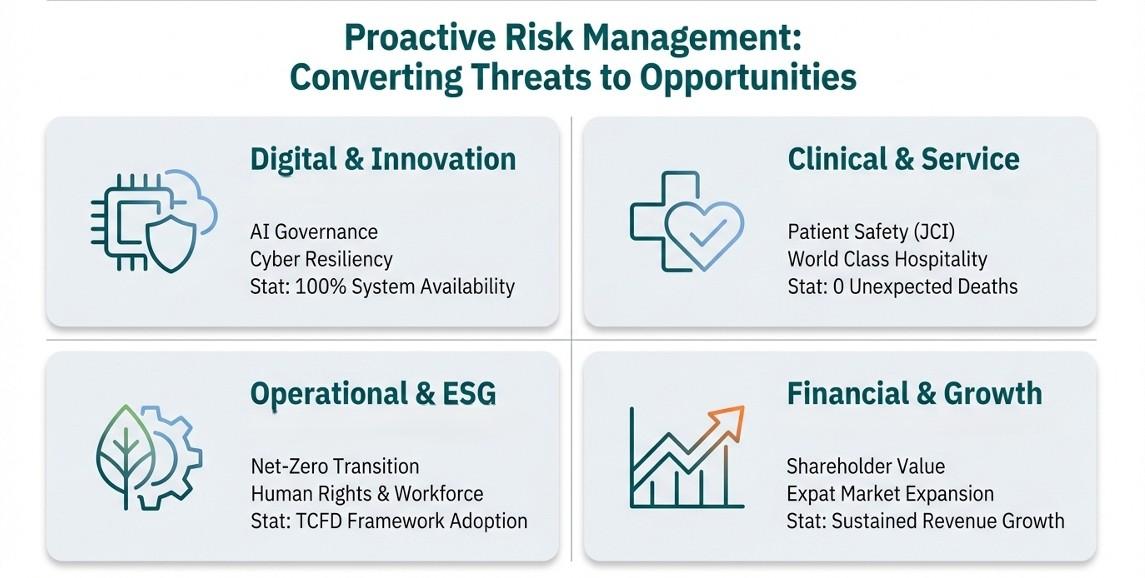
Risk Management Metrics, Targets & 2025 Achievements
Success from Proactive Risk Management is reflected in excellent quantitative data, as follows:
-
Clinical Risk: The unexpected in-hospital mortality rate (Unexpected Deaths) is 0 Cases
-
Cybersecurity Risk: The statistic of undefendable cyberattacks is 0 Case and critical systems are available (System Availability). 100%
-
Compliance Risk: The number of lawsuits, complaints, and non-compliance with significant laws is 0 Case
-
Business Growth Risk: Amidst intense competition, the hospital can maintain continuous growth of organizational revenue. through expanding the international patient market (Expat Insurance) and establishing Centers of Excellence.
Policy Document Link
https://investor.praram9.com/en/company-info/sustainability-management/risk-management
Page Number in Report
46 (48)
Risks to the Company's Business Operations
Risk Register
| Risk Name | Risk Characteristics | Consequences | Management Measures | Related Risk Factors |
|---|---|---|---|---|
| Emerging Risks: Risks from the Use of AI in Business Operations | In recent years, Artificial Intelligence (AI) has played an increasingly significant role in the medical and healthcare industries, including areas such as disease diagnosis, medical data analysis, enhancing service efficiency, and elevating the patient experience. Phra Ram 9 Hospital recognizes AI as a strategic technology with the potential to strengthen long-term competitiveness and support the organization's sustainable growth. However, the adoption of AI in business operations, particularly in the context of medicine and healthcare, which directly involves patient safety, treatment quality, and highly sensitive personal data, inevitably introduces new forms of risk that organizations must prioritize and manage meticulously. Therefore, the hospital has designated "Risks from AI Use in Business Operations" as one of its Emerging Risks for 2025. Phra Ram 9 Hospital is confident that these risks can be appropriately managed, provided there is a robust governance system and systematic preparedness, ensuring that the use of AI generates more "opportunities" than "risks" for the organization and all stakeholders. For this reason, the hospital has prepared key risk management and internal control guidelines, which include carefully selecting the types and scope of AI implementation to align with the medical context and organizational strategy; establishing an AI Governance Committee to define frameworks for governance, ethical use, transparency, and accountability; as well as ensuring data readiness, quality, suitability, and security before its use in AI development and application. This operation reflects Phra Ram 9 Hospital's approach to Proactive Risk Management, which aims to strike a balance between leveraging innovation to enhance operational efficiency and maintaining safety standards, quality of treatment, and the trust of service recipients, investors, and society as a whole, all of which are crucial foundations for stable and sustainable long-term growth. |
| 1. Careful consideration and selection of the type and scope of AI implementation in alignment with the medical context and organizational strategy. 2. Establishment of an Artificial Intelligence Governance Committee (AI Governance Committee) to define a governance framework, ethical use, transparency, and accountability. 3. Data readiness preparation to ensure quality, suitability, and security before being used in AI development and application. Such operations reflect Praram 9 Hospital's approach to Proactive Risk Management, which aims to balance the adoption of innovation to enhance operational efficiency with maintaining safety standards, quality of treatment, and the trust of service recipients, investors, and society as a whole.
| 732 · Description: Changes in technologies · Info category: STRATEGIC_RISK · 1714 · Description: Competition risk · Info category: STRATEGIC_RISK |
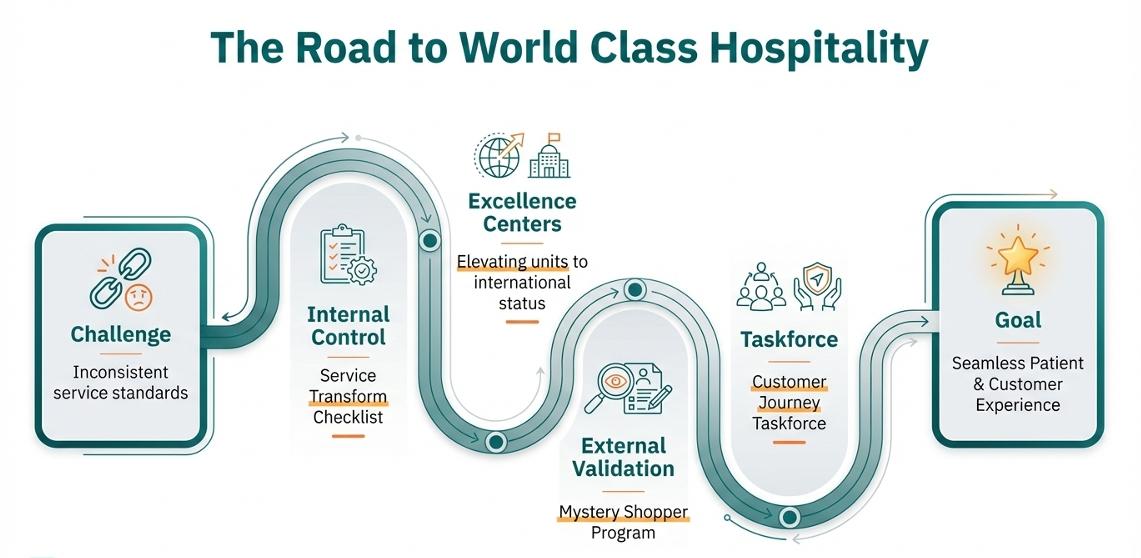
| Business Risk: Risk of not being able to achieve world-class hospitality within 5 years. | The hospital has a strategy to become a World Class Hospitality, which does not solely mean focusing on international patients, but also encompasses a holistic service experience (Patient & Customer Experience), which is crucial for achieving World Class Hospitality. The hospital has invested in service innovation and adapted to become a digital organization, as evidenced by online appointment scheduling. However, other services still rely on human/staff capabilities. Factors contributing to this risk include inconsistency in service standards across different departments, the challenge of comprehensively instilling an international service culture, and the necessity for personnel to adapt to rapidly changing expectations regarding service quality. The hospital manages this risk with two levels of management plans: 1) Internal control plans implemented as routine activities, including the implementation of the Service Transform Checklist, development of personnel potential through training courses according to professional standards, inviting experts to share knowledge, and regular surveys of service recipients' satisfaction. For the proactive risk management plan level, the hospital established a Customer Journey Taskforce unit to analyze the root causes of service points that still have problems and to establish preventive measures, as well as external evaluation of service quality (Mystery Shopper) for impartiality in planning to become a World Class Hospitality within 2 years. | 1.Impact on service recipient experience (Patient & Customer Experience) 2.Impact on international image 3.Failure to achieve strategic goals: Achieving World Class Hospitality is a crucial strategy. 4.Competitiveness and returns | 1. Establishing Standard Consistency (Standardization): One of the main risk factors is the inconsistency of service standards across different departments. This strategy therefore utilizes Service Transform Checklist as a guideline for daily operations (Internal Control) to ensure consistent standards across all service points. 2. Elevating Service to Excellence (Excellence Center): For domestic service recipients, this strategy is employed to deliver services through an Excellence Center, aiming to develop services to an excellent level, thereby mitigating business growth risks and maximizing customer satisfaction. 3. Collaboration with Proactive Monitoring Systems: The Service Transform project does not operate in isolation but coordinates with other departments, such as: - Customer Journey Taskforce: to analyze the root causes of issues at service points that do not meet standards and to establish preventive measures. - Mystery Shopper: External parties are engaged to assess service quality, providing impartial data to enhance project effectiveness. 4. Linking with Culture and Technology: This strategy supports the dissemination of international service culture and works in conjunction with the system CRM to enable the provision of appropriate services that respond to the rapidly changing expectations of service recipients.
| 729 · Description: Behavior or needs of customers / consumers · Info category: STRATEGIC_RISK · 732 · Description: Changes in technologies · Info category: STRATEGIC_RISK · 742 · Description: Human error in business operations · Info category: OPERATIONAL_RISK |
| Business Risk: Cyber Recovery Risk | The healthcare service industry is one of the industries with high data vulnerability, as medical and personal health information is highly valuable and continuously targeted by cyberattacks. Phra Ram 9 Hospital recognizes these risks and prioritizes the security management of its information systems as a strategic factor impacting service user confidence and business continuity. It can be stated that 2025 was the year Phra Ram 9 Hospital achieved success in cybersecurity risk management, with zero cases of unpreventable or unresolvable external and internal attacks, and 100% availability of critical systems. The hospital systematically implemented preventive controls by regularly designing and testing the robustness of critical information systems through penetration tests, updating and upgrading security software, and enhancing cybersecurity awareness among personnel at all levels to mitigate risks from human factors and external threats. Concurrently, the hospital has developed detective controls through the design of a flexible network infrastructure that supports continuous operation in emergency situations, while closely monitoring key risk indicators, such as System Availability and statistics of attempted attacks from both internal and external sources. The hospital's next key objective is to effectively elevate from prevention and detection to cyber resiliency. Recent global technology system disruptions have served as a crucial test demonstrating the readiness of the hospital's business continuity management system, which was able to restore systems and resume services within the defined timeframe (Recovery Time Objective: RTO), reflecting its proactive risk management capabilities and preparedness for unforeseen future events. | 1.Service User Confidence: As the medical industry is a prime target for cyberattacks due to the high value of medical and personal health information, a lack of rapid system recovery capability will directly impact the trust and confidence of patients utilizing the services. 2.Business Continuity: Cyber risk is considered a strategic factor. If information systems are attacked and cannot recover immediately, business operations will be disrupted, making it impossible to provide continuous medical services. 3.System Availability: If risk management is ineffective, it will affect the availability period of critical systems (System Availability). The hospital's goal is 100% availability to avoid impacting operations. 4.System Recovery Capability within Defined Time (Recovery Time Objective: RTO): Without Cyber Resiliency capabilities, an organization will be unable to recover systems and resume services within the defined timeframe in the event of unexpected incidents or global technological disruptions. 5.Impacts from various forms of threats: Potential risks arise from both human factors (employees) and external threats, such as attempts to breach systems to steal data or cause system failure. | 1. Preventive Controls The hospital emphasizes strengthening its systems to reduce the likelihood of attacks, as follows: Penetration Test: Regularly design and test the robustness of critical information systems. Software Updates: Regularly update security software to ensure it is always current. Security Awareness: Enhance cybersecurity knowledge for personnel at all levels to mitigate risks arising from human factors. 2. Detective Controls Involves monitoring and tracking potential anomalies: Resilient Network Infrastructure: Design systems to be flexible and support continuous operation during emergency situations. Key Risk Indicators (KRIs) Monitoring: Closely monitor information, such as System Availability Duration 3. Cyber Resiliency & Business Continuity Management (Cyber Resiliency & BCM) In the event of unexpected incidents, the hospital has management guidelines to minimize business disruption: Business Continuity Management: Possess systems to support unexpected events or global technological anomalies that may occur. Scheduled System Recovery (RTO): Focus on the ability to recover systems and restore services within a defined timeframe, or Recovery Time Objective (RTO) which serves as a crucial test for the business continuity management system. 4. Governance and Management Structure Three Lines of Defense Principle: Utilize a governance structure that promotes participation from all, including educating all personnel within the organization. Tangible Goals: By 2025, the hospital aims to achieve and has successfully achieved: Zero cases of undependable attacks. and critical systems maintain 100% availability.
| 744 · Description: Information security and cyber-attack · Info category: OPERATIONAL_RISK · 1720 · Description: System disruption risk · Info category: OPERATIONAL_RISK |
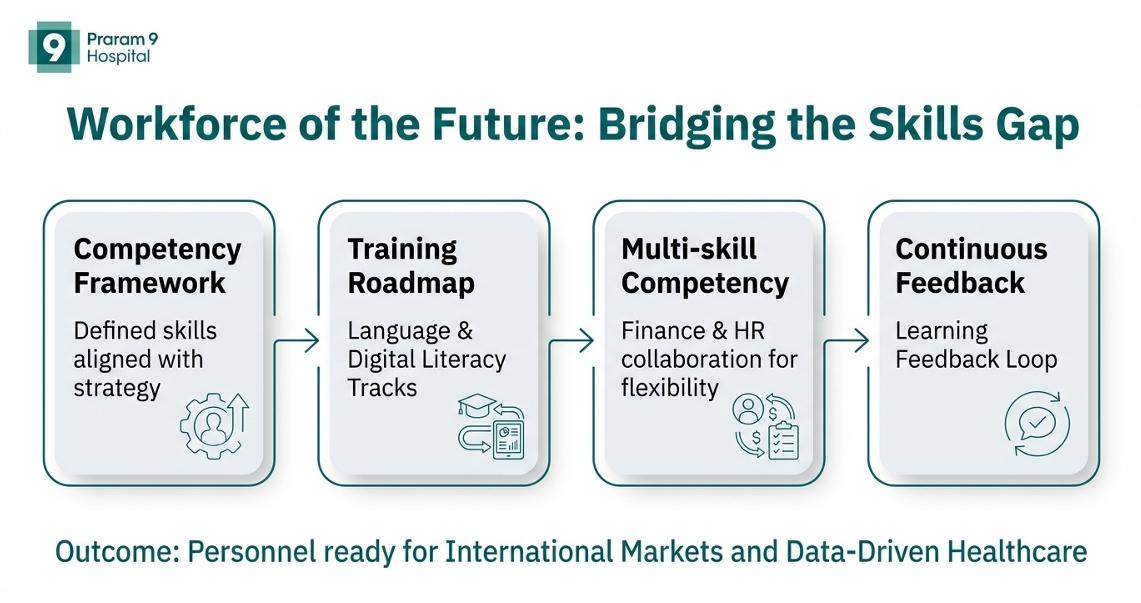
| Business Risk: Risk of personnel skills not meeting the organizational strategic direction | Personnel skills do not meet the organizational strategic direction. In an era where healthcare services must transition towards data-driven approaches, technology, and superior patient experiences, the skills and capabilities of personnel are crucial factors directly impacting the achievement of the organization's strategic goals. A key driver is the hospital's need to adapt to international standards. One significant risk for Praram 9 Hospital is Staff Competency Risk, which refers to instances where the skills and expertise of personnel are not sufficiently aligned with the requirements of the organization's core strategy in terms of services and international skills, including language and communication, as well as the adoption of new technologies, in-depth data management, and proactive service delivery. However, Praram 9 Hospital recognizes the importance of this issue and has systematically and proactively established management guidelines at the organizational level, such as:
These approaches reflect operations that not only identify risks but also lead to the development of personnel potential to grow in parallel with the hospital's strategy, which will enhance confidence among stakeholders and investors that Praram 9 Hospital is positioned to address future challenges. | Risk that Personnel skills do not align with the organization's strategic direction This impacts the hospital in several key dimensions, as follows: 1. Impact on achieving strategic goals and internationalization • Obstacles to International Adaptation: Personnel skills are a crucial factor directly impacting the achievement of strategic goals, especially for hospitals aiming for internationalization. • Limitations in Technology and Data Utilization: If personnel lack digital literacy and data insight management skills, the organization will be unable to effectively transition to data- and technology-driven operations. • Proactive Service: Inconsistent skills will result in personnel being unable to provide Proactive Service as defined by the strategy. 2. Financial impact and competitiveness • Decreased Human Resource Utilization Efficiency: Challenges in developing potential and readiness for job rotation lead to human resource utilization efficiency not meeting its full potential. • Overstated Personnel Costs: This results in high staff expenses compared to competitors and is inconsistent with revenue growth rates, thereby diminishing the hospital's competitive advantage. • Financial Discipline: A cost structure inconsistent with revenue due to personnel capability issues, affecting the overall cost management of the organization. 3. Impact on service standards and patient experience • Inconsistency of Standards: The necessity for personnel to adapt to rapidly changing quality expectations. Failure to do so will impact the progression towards becoming World Class Hospitality. • Patient Experience: As service delivery primarily relies on employee capabilities, a lack of language skills and international communication will directly impact the holistic service experience, 4. Impact on stakeholder confidence • Investor Confidence: If the organization cannot demonstrate that its personnel have the potential to grow in line with the strategy, it will affect the confidence of stakeholders and investors in addressing future challenges. • Maximum Return: Ultimately, this may affect the goal of generating maximum returns for investors, shareholders, and employees if the business cannot grow according to the strategic plan. | Management Approaches to Mitigate Impact: The hospital has implemented proactive measures to address this issue, such as developing Competency Framework that are clear, the creation of Training Roadmap by job function, skill assessment Digital Literacy and language in a tangible manner, including the promotion of diverse skills ( Multi-skill Competency ) to enhance workforce management flexibility and reduce long-term costs. Phra Ram 9 Hospital has established management measures risks which is a case where employee skills do not align with the strategy for international adaptation and systematic, proactive technology adoption. The key measures are as follows: 1. Framework & Roadmap • Development of Competency Framework System: The hospital has developed a competency framework aligned with its organizational strategy to clearly define essential skills for each job role and continuously communicate this to employees. • Preparation of Training Roadmap: The Human Resources department utilizes the Competency Framework as a foundation for creating a Training Roadmap to develop personnel effectively. 2. Skill-Specific Development • Language and Internationalization Skills: Language and international communication skills are measured and evaluated, and the assessment results are used to plan employee development, showing demonstrable positive outcomes. • Digital Literacy: Focuses on developing skills in new technologies and in-depth data management to support data-driven work approaches, • Multi-skill Competency: The Human Resources department, in collaboration with the Finance department, promotes multi-skilled personnel to enhance workforce management flexibility and reduce long-term personnel cost constraints. 3. Learning & Controls • Continuous Learning Feedback Loop: Implement a continuous learning assessment system to ensure tangible skill improvement and alignment with evolving organizational roles and responsibilities. • Service Transform Checklist: Used as an internal control plan for daily activities to develop personnel potential through professional standard training courses and by inviting experts to share knowledge. 4. Governance & Culture • Talent Management: The hospital adheres to the principle of Attracting, Developing, and Retaining Capable Individuals to secure personnel who meet business requirements.
| 729 · Description: Behavior or needs of customers / consumers · Info category: STRATEGIC_RISK · 739 · Description: Shortage or reliance on skilled workers · Info category: OPERATIONAL_RISK · 742 · Description: Human error in business operations · Info category: OPERATIONAL_RISK |
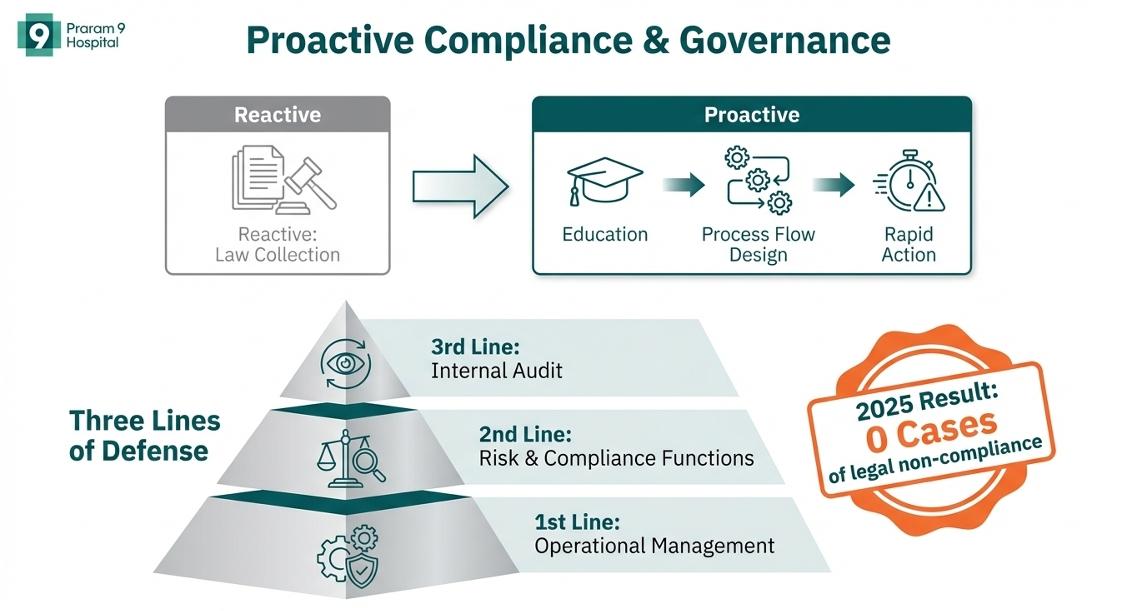
| Business Risk: Risk of Non-Compliance with Regulations Related to Business Operations | Compliance risk related to business operations. The hospital is subject to various levels of laws and regulations that must be complied with, such as laws and regulations for being a listed company, and laws and professional regulations for medical establishments. As of 2025, the hospital has not encountered any lawsuits, complaints, or significant non-compliance with laws, demonstrating effective proactive legal operations. The hospital manages legal/regulatory compliance risks through both reactive and proactive approaches. In its reactive approach, the hospital systematically compiles relevant laws and regulations at the legal level, as well as regulations from various professional groups. Proactive measures include providing knowledge and communicating with employees across all sectors regarding legal and regulatory matters, and establishing a legal action workflow in cases of non-compliance with such regulations, specifying who should do what and how. This is to ensure a rapid response to such issues, or to promptly communicate and clarify if any potential non-compliance with regulations is identified. | Legal and litigation impacts: Non-compliance with regulations may lead to lawsuits and various complaints. which negatively impacts the organization's reputation and credibility. 1.Impact on personnel and labor: Failure to comply with labor standards or labor laws will affect the fairness, welfare, and morale of employees. Furthermore, it may lead to labor disputes. which impacts the continuity and sustainability of operations. 2.Impact on safety and personal data: Especially the risks from using new technologies such as AI; if there is a lack of regulation consistent with established rules, it will directly impact patient safety, quality of treatment, and the security of highly sensitive personal data. 3.Impact on international standards and trust: Failure to comply with standards such as JCI (Joint Commission International) or regulations for listed companies will affect international image. and the trust of service recipients, investors, and all stakeholders. 4.Impact on growth and returns: Non-compliance with key laws may hinder the achievement of strategic objectives and affect the creation of maximum returns for investors and shareholders. | Praram 9 Hospital has implemented compliance risk management measures at the level of listed company laws, professional regulations, and international standards. Operations are divided into two main forms: reactive and proactive, as follows: 1. Proactive Risk Management Measures The hospital emphasizes prevention before non-compliant actions occur, as follows: • Education and Communication: Focuses on educating and communicating with employees across all sectors regarding applicable laws and regulations to ensure understanding and correct implementation. • Development of Operating Procedures (Flow): Clear legal operating procedures have been established to define who should do what to respond and rectify quickly if there is a potential for non-compliance or if non-compliant practices occur. • Oversight through Specialized Committees: - AI Governance Committee: Established to define a governance framework for ethical, transparent, and responsible AI usage within the medical context. - ESG Committee: Oversees operations to comply with international sustainability standards such as TCFD, GRI, and preparedness according to the IFRS S1-S2 framework. • Three Lines of Defense Structure: This principle is used to ensure that everyone in the organization is involved in risk management and to foster a culture of compliance. 2. Reactive Risk Management Measures • Systematic Compilation of Regulations: The hospital has systematically compiled relevant regulations, both at the legal level and professional group regulations, to serve as a database for reference and verification. • Monitoring and Reporting: Legal compliance is monitored and reported, and in 2025, the hospital achieved success by No cases, no complaints, and no significant legal non-compliance found. 3. Measures in Specific Areas • Labor and Human Rights: Strictly adheres to labor laws, ensures a safe working environment, and is in the process of developing human rights policies in line with international practices. • Medical Standards: Adheres to clinical risk policies consistent with international standards. JCI (Joint Commission International) continuously. • Anti-Corruption: Utilizes the framework of GRC (Governance, Risk and Compliance) In operations to ensure transparency and reduce the risk of corruption or bribery.
| 756 · Description: Change in laws and regulations · Info category: COMPLIANCE_RISK · 742 · Description: Human error in business operations · Info category: OPERATIONAL_RISK · 1723 · Description: Legal risk · Info category: COMPLIANCE_RISK |
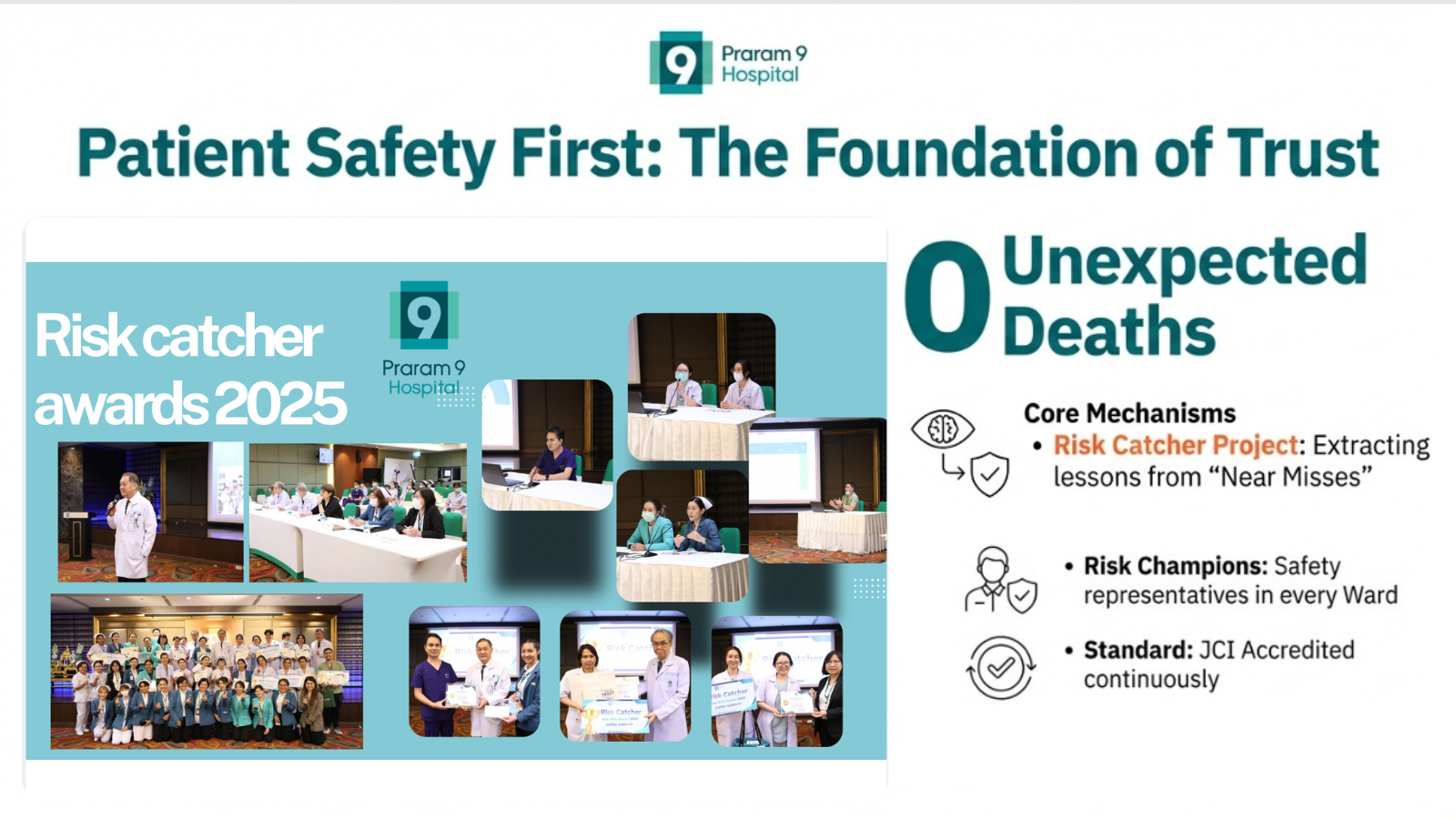
| Medical Service Risks: Patient Safety Risks | Praram 9 Hospital prioritizes patient safety, as evidenced by a continuous reduction in medical incidents over several years and zero unexpected in-hospital deaths. Furthermore, risks in medical service provision are managed according to checklists and patient safety standards set by JCI (Joint Commission International), which the hospital has been certified for multiple times consecutively. The proactive patient safety risk management plan has been implemented as follows:
| Praram 9 Hospital prioritizes Patient Safety is paramount , and the impacts of risks in this area can be categorized into various dimensions as follows: 1. Direct Impact on Life and Body (Clinical Impact) This is the most severe impact, which the hospital rigorously focuses on preventing: • Unanticipated deaths: The most severe impact is the unforeseen loss of patient lives in the hospital. • Medical treatment incidents: The occurrence of incidents or errors in the treatment process (Incident), which affects patient well-being, • Patient identification errors: If the IPSG1 system (Identify Patients Correctly) fails, it will lead to incorrect treatment for the wrong person, type, or location. • Near Miss incidents: Even if no harm has yet occurred to patients, frequent near-miss incidents reflect vulnerabilities in the safety system that require systematic analysis. 2. Impact on Treatment Quality and International Standards (Quality & Standard Impact) • Decreased quality of treatment: Risks in medical service provision directly affect the quality of medical care patients should receive according to standards, • Loss of international standard certification: Failure in safety management may result in the hospital not receiving standard certification JCI (Joint Commission International) which is an international indicator of hospital quality, • Inconsistent service standards: Risks related to personnel potential may lead to varying patient care standards across different units (Wards), affecting overall safety. 3. Impact from the Use of Technology and Innovation (Technological Impact) • Risks from AI usage: The use of artificial intelligence in diagnosis or data analysis, if lacking proper oversight, will directly impact Patient safety and quality of care as it involves lives and highly sensitive personal information. • Medical data security: Cyber threats may lead to the leakage or distortion of critical medical information, affecting the accuracy of continuous medical treatment, 4. Impact on Experience and Trust (Trust & Experience Impact) • Service experience (Patient Experience): Safety risks negatively impact the holistic service experience, which is at the core of becoming a World Class Hospitality • Stakeholder confidence: Should safety failures occur, they will impact the confidence of service recipients, investors, and society as a whole, which is the foundation for sustainable growth. Management approaches to mitigate impacts: The hospital employs proactive measures, such as the project "Risk Catcher" To learn from mistakes, the appointment of Risk Champion in each ward to foster a safety culture, and the preparation of Risk Register to systematically monitor risks at all levels. | Praram 9 Hospital prioritizes Patient Safety as the top priority. Risk management measures are defined at the policy level, organizational structure, and proactive operational guidelines, as follows: 1. Policies and International Standards • Adherence to JCI Standards: The hospital establishes clinical risk policies focusing on patient safety in accordance with international JCI (Joint Commission International) standards and has been continuously accredited in every cycle. • Risk Management Framework: Utilizes international standards COSO ERM 2017 in enterprise-wide risk management to ensure that the risk identification and management process is comprehensive according to the five major components, 2. Proactive Risk Management Measures The hospital undertakes various activities to prevent medical errors, as follows:
3. Governance Structure
As a result of implementing these measures, the hospital has maintained excellent outcomes, with The statistic for unanticipated in-hospital deaths is 0. and the number of medical incidents has continuously decreased.
| 729 · Description: Behavior or needs of customers / consumers · Info category: STRATEGIC_RISK · 742 · Description: Human error in business operations · Info category: OPERATIONAL_RISK · 1723 · Description: Legal risk · Info category: COMPLIANCE_RISK |
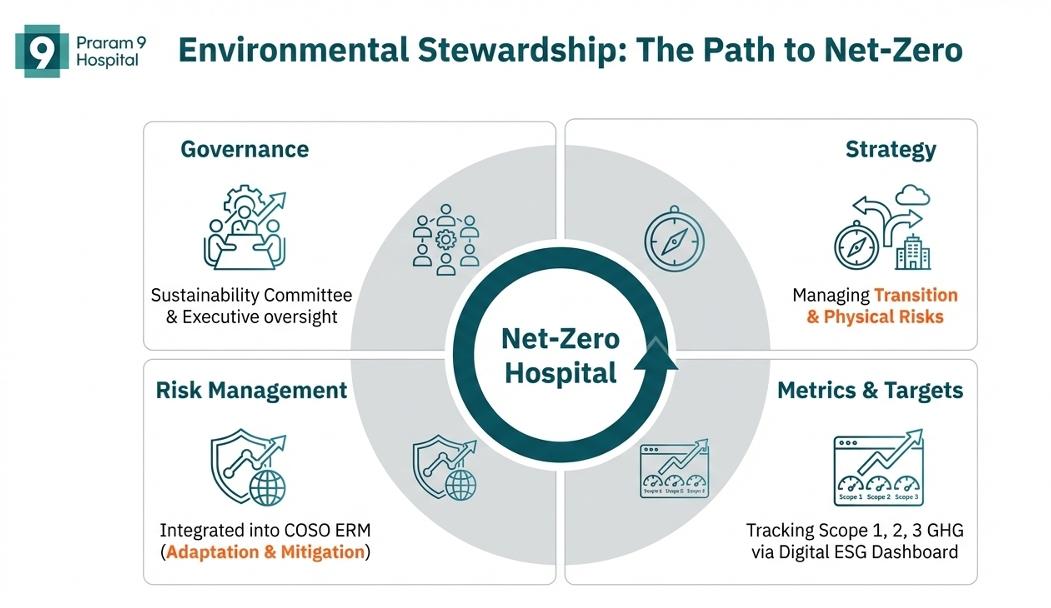
| ESG Risks: (Environmental) Climate Change Risks | Risks related to the business's drive towards becoming a Net-Zero organization not meeting targets (climate change Climate Change ) The Board of Directors of Praram 9 Hospital Public Company Limited prioritizes sustainable business operations, recognizing that climate change is a significant risk and opportunity factor for the organization's competitiveness and long-term value creation. The hospital has set clear goals for becoming a Net-Zero Hospital and has therefore adopted the TCFD (Task Force on Climate-related Financial Disclosures) framework. and is consistent with IFRS S2 Climate-related Disclosures covering all 4 pillars: Governance, Strategy, Risk Management, and Metrics & Targets to demonstrate commitment to transparently managing climate-related risks and opportunities, and as part of driving the organization towards Net Zero, as follows: 1) Governance : Governance of Climate Change Risks and Opportunities The Board of Directors oversees environmental and climate change issues at the policy and strategic levels, regularly monitoring environmental performance at least six times a year, and assigning the Corporate Governance and Sustainable Business Development Committee to consider related plans, targets, and metrics at least twice a year. Management is responsible for operations, greenhouse gas inventory preparation, TCFD-aligned risk assessment, and reporting to the Board of Directors, integrating climate issues into the Enterprise Risk Management (ERM) process. 2) Strategy : Strategy and Planning The company has defined four main strategies (4 Pillars Strategy), namely: 2.1. Greenhouse Gas Reduction Strategy 2.2. Adaptation and Resilience Strategy 2.3. Sustainable Healthcare and Innovation Strategy 2.4. Engagement and Governance Strategy In assessing financial impacts, the company has established a timeframe for risk management and set targets across three phases: Short-term (Year-on-Year or YoY), Medium-term (within 5 years or by 2028), and Long-term (aiming for Net Zero by 2065). by identifying significant risks and opportunities as follows: 2.1 Physical Risks
2.2 Transition Risks
2.3 Opportunities
2.4 Climate Scenario Analysis The company has conducted climate scenario analysis under the assumption of
to assess short-term, medium-term, and long-term impacts on energy costs, infrastructure, and business continuity. The assessment results are used to inform investment planning in renewable energy and building efficiency improvements. 3) Risk Management : Risk Identification, Assessment, and Management Process The company integrates climate change risks into its Enterprise Risk Management (ERM) by analyzing the impact and likelihood across the value chain. The company integrates climate-related risks into its Enterprise Risk Management (ERM) system, with the following steps: 1.Risk Identification from both Physical and Transition Risks. 2.Impact & Likelihood Assessment 3.Risk Prioritization 4.Defining Control Measures and Mitigation & Adaptation Plan 5.Monitoring and Reporting to the Board of Directors including closely monitoring changes in government policies. If residual emissions are identified, the company has a policy to study the procurement of carbon credits for appropriate offsetting. 4) Metrics & Targets : Climate Metrics and TargetsThe company is committed to driving the organization towards climate sustainability goals, setting 2022 as the base year and announcing the following targets:
2025 Performance & Independent Verification: The company monitors and evaluates greenhouse gas emissions according to international standards (GRI). The latest performance results are as follows: 4.1 Greenhouse Gas Emissions In 2025, the company's greenhouse gas emissions were as follows: Scope 1: 604 tCO2e / Scope 2: 6,213 tCO2e / Scope 3: 6,072 tCO2e. Total: 12,889 tCO2e.
4.2 Implementation of Greenhouse Gas Reduction Projects The company implements proactive projects to reduce environmental impact and enhance operational efficiency: 1. Green Energy:
2. Water Innovation:
3. Circular Economy:
4.3 Targets
The company is developing quantitative short-term targets to enhance clarity in annual performance tracking and to prepare for international science-based targets. 4.4 Data Assurance: The company prepares greenhouse gas inventories according to the guidelines of the Thailand Greenhouse Gas Management Organization (TGO). The company prioritizes the reliability of disclosed information to ensure maximum transparency, by undertaking the following:
| Impacts from Risks related to driving the business towards becoming a Net-Zero organization not meeting targets are classified as significant risks within the environmental risk group (Environmental Risk) under the sustainability framework (ESG Risk), with the following key impacts:
However, the hospital has implemented measures to mitigate these impacts, such as the use of Digital ESG Dashboard To closely monitor greenhouse gas emissions data (Scope 1, 2, and 3) to ensure clear and verifiable target setting and reduce the likelihood of failing to achieve set targets. | Praram 9 Hospital has established risk management measures in the event that the business's drive towards becoming an organization Net-Zero targets are not met. systematically under the sustainability framework (ESG Risk), elevating this risk to an enterprise-level risk, with detailed management measures as follows: 1. Structural Governance
2. Risk Management Measures The hospital utilizes the framework of COSO ERM In identifying and prioritizing risks (currently at a medium to high level), with two main measures:
3. Technology and Metrics and Targets
4. Application of International Standards Frameworks
These measures focus on transition to meet the expectations of investors and service recipients, as well as to prepare for potentially stricter carbon regulations in the future.
| 756 · Description: Change in laws and regulations · Info category: COMPLIANCE_RISK · 1717 · Description: ESG risk · Info category: STRATEGIC_RISK · 751 · Description: Impact on the environment · Info category: OPERATIONAL_RISK · 1719 · Description: Climate change and disasters · Info category: STRATEGIC_RISK |
| ESG Risk (Social Risk): Employee Health and Safety Risk | Employee health and safety are crucial factors affecting work performance, morale, and organizational sustainability. Particularly in the hospital business, employees face risks from various infectious diseases that may arise from patient care, working in potentially hazardous environments such as exposure to chemicals, working in areas with inappropriate lighting or noise, as well as work-related stress and operational accidents. | Without proper management of employee health and safety risks, there could be direct and indirect impacts on employees and the organization, such as:
|
| 749 · Description: Safety, occupational health, and working environment · Info category: OPERATIONAL_RISK · 1722 · Description: Pandemic risk · Info category: OPERATIONAL_RISK |
| ESG Risk (Social Risk): Human Rights Risk |
The hospital operates under its Diversity and Inclusion Policy, adhering to the principle of meritocracy in recruiting, appointing, and developing personnel. This ensures that personnel of all genders receive equal opportunities for career advancement, which is reflected in the balanced proportion of female and male representation in executive positions and on the company's board of directors, as well as a personnel selection process that does not impose gender-based conditions and appropriately respects gender diversity. This approach helps mitigate human rights risks, fosters an organizational culture that respects human dignity, and supports Praram 9 Hospital's business operations to be responsible, transparent, and sustainable in the long term. | Social risk management of Praram 9 Hospital Impacts from Human Rights Risk Can be summarized as follows:
The hospital is therefore in the process of systematically preparing data and studying human rights policies to establish practices consistent with international standards and mitigate potential negative impacts. | Praram 9 Hospital has human rights risk management measures in place, focusing on fostering an organizational culture that respects human dignity and adheres to international guidelines, as follows:
These measures not only help mitigate human rights risks but also foster accountability and transparency, which are fundamental pillars for long-term sustainable business operations. | 733 · Description: Business operations of partners in the supply chain · Info category: STRATEGIC_RISK · 745 · Description: Loss or damage from non-compliance of partners or counterparties · Info category: OPERATIONAL_RISK · 753 · Description: Impact on human rights · Info category: OPERATIONAL_RISK |
| ESG Risks (Governance): Corporate Governance | Governance risks arise from a lack of transparency or the absence of internal controls within the organization, which may lead to corruption, bribery, and unfair decision-making in administrative processes. Good governance is crucial for maintaining the trust of shareholders and stakeholders. | The impact of regulatory risks can affect the reputation, credibility, and trust of shareholders. Should corruption or bribery occur, it may cause patients and stakeholders to lose trust in the organization. Furthermore, non-compliance with regulations may lead to fines or legal proceedings, which will impact financial operations and result in lost opportunities for business growth. | To manage regulatory risks, Praram 9 Hospital has implemented various measures, such as utilizing the GRC framework and 3 Lines of Defense, to ensure transparent governance and reduce corruption. Furthermore, employees at all levels receive training on regulatory compliance and anti-bribery practices, along with regular monitoring and evaluation of operations to ensure adherence to established standards. | 759 · Description: Corporate Governance · Info category: COMPLIANCE_RISK |
Risks to Securities Holders' Investment
Risk Register
| Risk Name | Risk Characteristics | Consequences | Management Measures | Related Risk Factors |
|---|---|---|---|---|
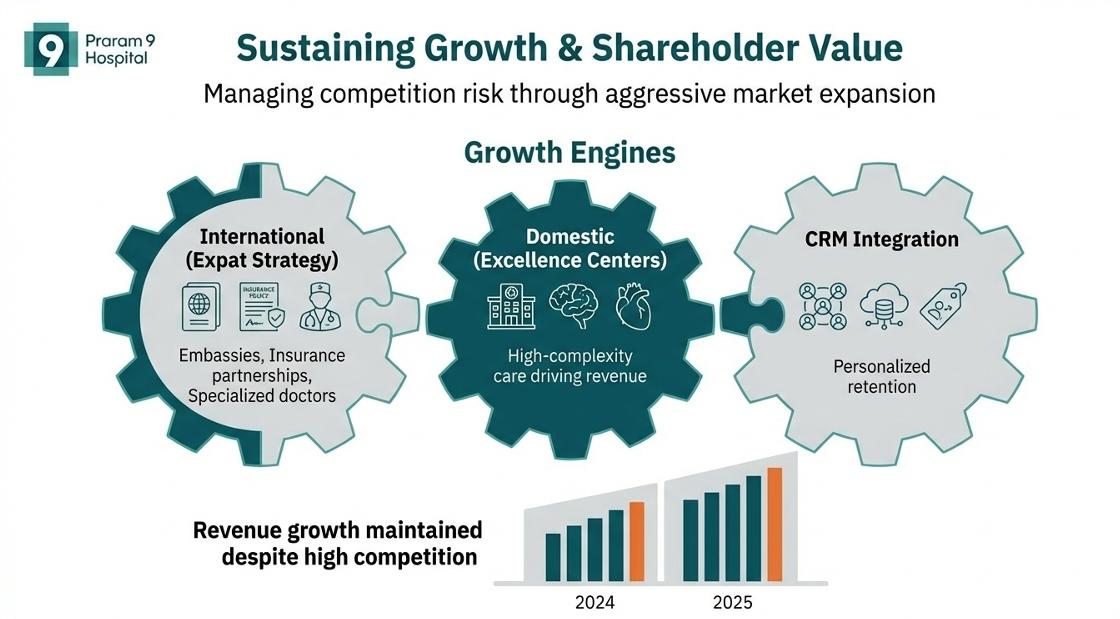
| Shareholder Risk: Risk of not achieving business growth targets. | Risk of business growth not meeting targets. The hospital's ultimate goal is to generate maximum returns for stakeholders, such as major investors, minor investors, shareholders, and employees. However, the medical business is highly competitive, requiring the hospital to develop robust strategic plans to cope with intense competition. In 2024-2025, the hospital's revenue growth did not decline because the hospital proactively managed revenue risks. For international patients, the hospital penetrated markets through embassies, utilized EXPAT Insurance strategies, and recruited a number of physicians specialized in treating international patients. Concurrently, the business development department consistently opened new country markets. For domestic patients, the hospital employs a strategy of offering services through Excellence Centers, developing excellent services through the Service Transform project, organizing periodic marketing promotion activities, and implementing a CRM system to offer appropriate services. Following the implementation of various risk management strategies, the hospital achieved continuous revenue growth, and the level of risk to shareholders remained acceptable. | Impact from Risk of business growth not meeting targets of Praram 9 Hospital, impacting the organization and stakeholders in the following key dimensions: Stakeholder Returns: The hospital's ultimate goal is to generate maximum returns for all stakeholder groups. If growth does not meet targets, it will directly impact Major and minor investors, shareholders, and employees in terms of expected returns. Investor Confidence: The inability to achieve strategic growth targets will affect Confidence of stakeholders and investors In assessing whether the hospital is adequately prepared and capable of addressing future challenges. Competitive Advantage: As the medical business is highly competitive, if revenue growth does not keep pace with expenses, especially Staff Expenses high, will lead to an imbalanced financial structure and reduce competitiveness against other private hospitals, Achievement of Vision and Mission: Growth below target may reflect a failure to adapt to international standards or an inability to create Holistic Service Experience (Patient & Customer Experience) according to the established World Class Hospitality standards, which is the core of the organizational strategy, | Praram 9 Hospital has established management measures Risk of business growth not meeting targets intensively to cope with the highly competitive medical business, focusing on maximizing returns for investors, shareholders, and employees. The proactive measures are detailed as follows:
The hospital penetrates international markets through various channels to expand its revenue base:
Focus on enhancing service quality and targeted customer access:
However, data indicates that in 2024-2025, the hospital effectively managed revenue risks proactively, resulting in sustained and acceptable revenue growth. This was achieved by employing strategies such as penetrating international markets through EXPAT Insurance and offering services via Excellence Centers for domestic patients. Through these diverse strategies, the hospital has been able to generate continuous revenue growth and maintain shareholder risk at an acceptable level.
| 769 · Other name: Risk of business growth not meeting targets · Description: Other · Info category: HOLDER_RISK |